
Why REISHI?
Why Reishi Beta-Glucan?
Ingredients containing β-glucan
- 01 Reishi mushroom
- 02 Mushrooms
- 03 Barley and Oats
- 04 Seaweed
- 05 Yeast
* This page provides information on the academic background of the ingredients contained in Reishi, and does not guarantee the effects or efficacy of REISHI Lab. products.
What is Reishi?
Reishi mushrooms have been valued since ancient times and continue to attract attention today.

- known as a Chinese herbal medicine with thousands of years of history
- Positioned as the "Eastern and Western Yokozuna" alongside Korean ginseng
- Descriptions in the Nihon Shoki and Honzō Wamyo
- Among reishi mushrooms, deer horn reishi is a rare commodity, found in only 1 out of 100,000 plants.
β-glucan 1,3/1,6
Focusing on β-glucans 1,3/1,6
- Definition (a type of polysaccharide/dietary fiber)
- History of Discovery (1940s: Baker's Yeast)
- Naming background (β-1,3D-glucan)
- Optimal intake: Effective on an empty stomach

IMMUNE PATHWAY
6 Ways Beta-Glucan Boosts Immunity
01
Ingestion
Resistant to decomposition and absorption
02
Binding to receptors
Dectin-1 / CR3
03
Activation of immune cells
Macrophages, dendritic cells, and neutrophils
04
Cytokine secretion
IL / TNF-alpha
05
Activation of acquired immunity
T cells, B cells, Antibody production
06
Whole-body immunity enhancement
Protection against infection and prevention of reinfection
用語解説
What are macrophages? ⌄
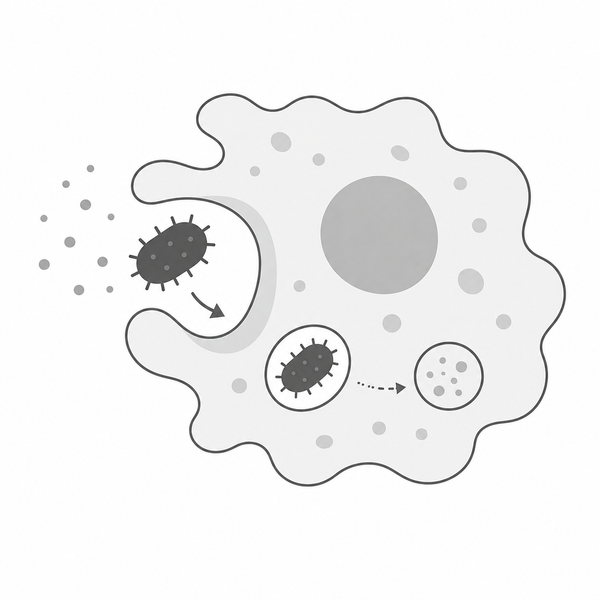
They are a type of white blood cell that plays a role in the immune system and are known as "phagocytes," which engulf pathogens and dead cells that invade the body. They play an important role in innate immunity (the defense mechanisms we are born with) and are widely distributed throughout the body's tissues.
In addition to engulfing and eliminating pathogens, they also induce acquired immunity (adaptive immunity) by transmitting information about foreign substances to T cells.
Dendritic cells are ⌄
As the name suggests, these immune cells have tree-like projections. Originally part of white blood cells in the blood, they are carried throughout the body by the bloodstream and are distributed in various locations inside and on the surface of the body.
When they detect foreign substances inside or on the body's surface, they engulf them, remember their characteristics, and transmit this information to T cells, which act as commanders. Similar to macrophages, they possess phagocytic activity, but dendritic cells are particularly characterized by their specialized role in "antigen presentation."
What are cytokines? ⌄
These are small protein molecules primarily secreted by immune cells, acting as biologically active substances that mediate cell-to-cell communication and regulate immune responses.
Many of them are involved in immunity and inflammation, including interleukins (IL), interferons (IFN), and tumor necrosis factors (TNF). Activated immune cells secrete cytokines to promote the function of other immune cells, thereby maintaining the overall balance of the immune response.
T cells and B cells ⌄
There are two types of lymphocytes responsible for immune responses, each with different roles.
T cells are central to cellular immunity, directly attacking abnormal cells such as virus-infected cells and cancer cells. They are divided into killer T cells, which eliminate abnormal cells, and helper T cells, which regulate the function of other immune cells.
B cells are responsible for antibody production; when pathogens invade, they produce antibodies to attack and eliminate the pathogens.
Source supplement: Morita Pharmaceutical (macrophage explanation) / Juntendo University Professor Okumura supervised video link
TWO KEY COMPOUNDS
Two active ingredient approaches
Beta-glucan
Polysaccharides - Interactions with Immune Cells
Beta-glucan derived from Reishi mushroom is known as an important ingredient that regulates immune function and supports daily health maintenance.
Main ingredient derived from Reishi mushroom:
Ganoderic acid
Triterpenoids — The bitter component characteristic of Reishi mushrooms
One of the triterpenoid groups found in reishi mushrooms. It is an important group of compounds that supports the unique characteristics of reishi, from a different perspective than polysaccharides.
Main active ingredients of ganoderic acid:
RESEARCH
Introduction to Academic Research
Research on immunity ⌄
There are many studies on the immune-boosting effects of Reishi mushrooms.
Clinical trials investigating the effects of Reishi mushroom extracts on immune function have reported improved immune function in treated patients, including activation of immune cells and increased cytokine production. [1]
Another study evaluated the immunomodulatory activity of Reishi mushrooms. It showed that active components in Reishi mushrooms promote the activation and proliferation of immune cells and enhance immune responses by modulating cytokine balance. [2]
References:
[1] Gao, Y., Zhou, S., Jiang, W., Huang, M., Dai, X., Li, X., ... & Liu, J. (2003). Effects of ganopoly (a Ganoderma lucidum polysaccharide extract) on the immune functions in advanced-stage cancer patients. Immunological Investigations, 32(3), 201-215.
[2] Lin, Z. B., & Zhang, H. N. (2004). Anti-tumor and immunoregulatory activities of Ganoderma lucidum and its possible mechanisms. Acta Pharmacologica Sinica, 25(11), 1387-1395.
Research on Allergy Alleviation ⌄
Studies suggest that Reishi mushrooms may alleviate allergy symptoms.
By inhibiting the production of inflammatory cytokines and the activation of mast cells, Reishi may suppress allergic reactions. [4]
In animal studies (allergic rhinitis models in mice), the administration of Reishi extract significantly reduced nasal symptoms and the degree of inflammation. A decrease in serum anti-allergic immunoglobulin E (IgE) levels was also observed, suggesting the suppression of allergic reactions.
These findings suggest that Reishi may contribute to the relief of allergy symptoms.
References:
[4] Li, F., Zhang, Y., Zhong, Z., Cheng, G., Zhang, Y., & Zhang, Z. (2007). Inhibitory effect of Ganoderma lucidum on mast cell-mediated allergic inflammation in vivo and in vitro. Inflammation Research, 56(5), 204-211.
Research on lifestyle-related diseases ⌄
There are many studies on the effects of Reishi mushrooms on lifestyle-related diseases.
Research investigating whether Reishi polysaccharides have antioxidant effects against oxidative stress has shown that they reduce oxidative stress by inhibiting the production of lipid peroxides and increasing the activity of antioxidant enzymes. [5]
Another study also evaluated the possibility that Reishi polysaccharides are involved in balancing gut microbiota. [6]
References:
[5] Chen, W. C., Hau, D. M., Lee, S. S., & Chen, C. J. (2012). Ganoderma lucidum polysaccharides reduce lipid peroxidation in diabetes-induced oxidative stress. Journal of Asian Natural Products Research, 14(1), 25-34.
[6] Yang, Q., Hu, Y., & Mou, Y. (2014). Effects of Ganoderma lucidum polysaccharides on chronic pancreatitis and intestinal microbiota in mice. International Journal of Biological Macromolecules, 69, 155-159.
COMPONENTS
List of Major Active Ingredients in Reishi Mushrooms
| 成分カテゴリ | 主な成分名 | 期待される作用 |
|---|---|---|
| Polysaccharides | Beta-glucan | Maintaining immune balance |
| Triterpenoid | Ganoderic acid | Anti-inflammatory and antioxidant |
| Sterols | Ergosterol | Cell membrane stabilization |
| Protein | LZ-8 | Immune modulation |
We want to share the power of reishi with as many people as possible. That desire gave birth to REISHI Lab.
Return to home